

Last month I summited Kilimanjaro again. This time, I was leading.
Leadership in harsh environments throws up all sorts of challenges. But every one of those challenges is also an opportunity – to learn, to grow and, most importantly, to support the people around you.
So I wanted to share a few principles I take into leadership. I genuinely believe that if you pursue them, and actively try to put them into practice, they make you a better person and a better teammate.
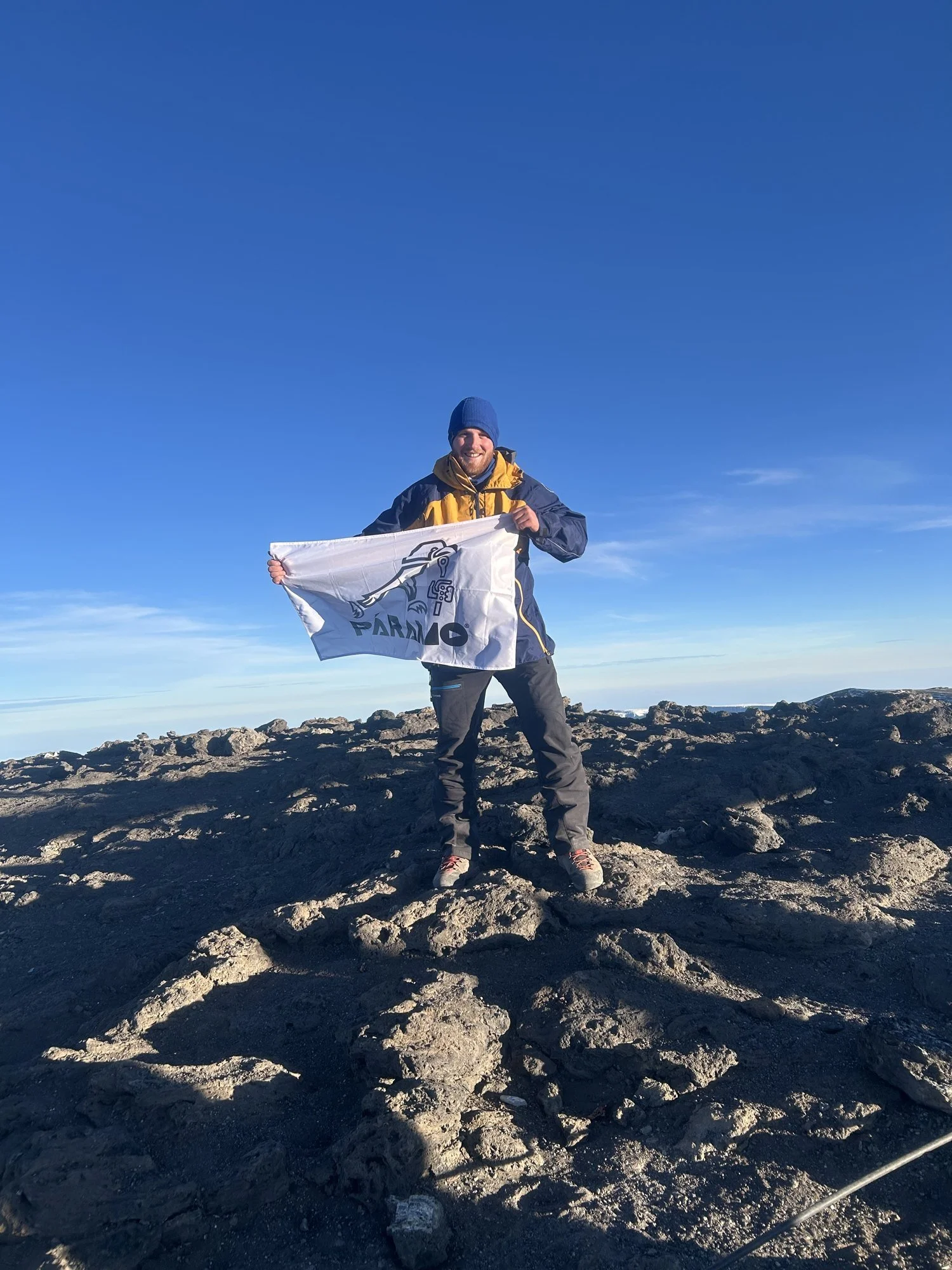
On the summit, October 2026.
1. Leadership is about service
For me, if you’re a leader, you’re there to serve. I like the language used in politics: MPs are elected to “serve as” a Member of Parliament. As a leader, your main concern should be the wellbeing, operational capacity and progress of your team.
So if you’re the lead – the one where the buck stops – your focus belongs with the people you’re there to serve. Make sure their needs are being met. Try to pre-empt concerns and issues before they arrive. Always put them first. And above all, put them above yourself.
Dick Winters – the legendary lieutenant, captain and major of Easy Company, 101st Airborne – put it simply: “Never put yourself in a position where you can take from your men.”
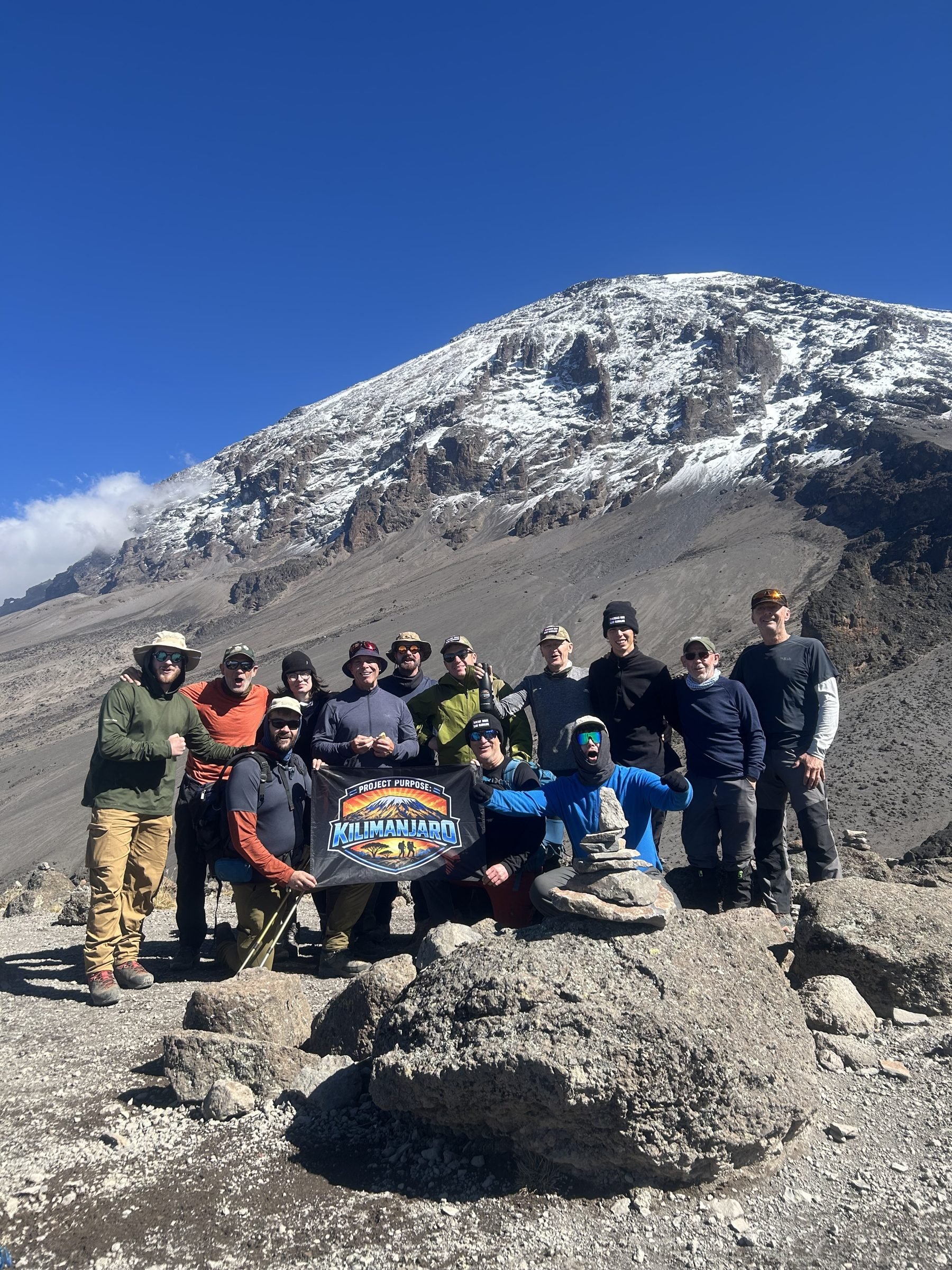
The team, with Kibo behind us.
2. Don’t pretend
Being a leader doesn’t mean you’re infallible. It doesn’t mean you stop being human.
At 4am on summit night, I hit a hole. I hadn’t eaten enough and I was deep in struggle town. My attitude wasn’t to lie, put on a brave face and pretend I was totally fine – because I knew my team were struggling too. Above 5,300m in the middle of the night, of course we were all struggling.
I think that if they know I’m battling as well, it brings us all closer together as we push on towards success.
So don’t pretend. Be honest, and be relatable.
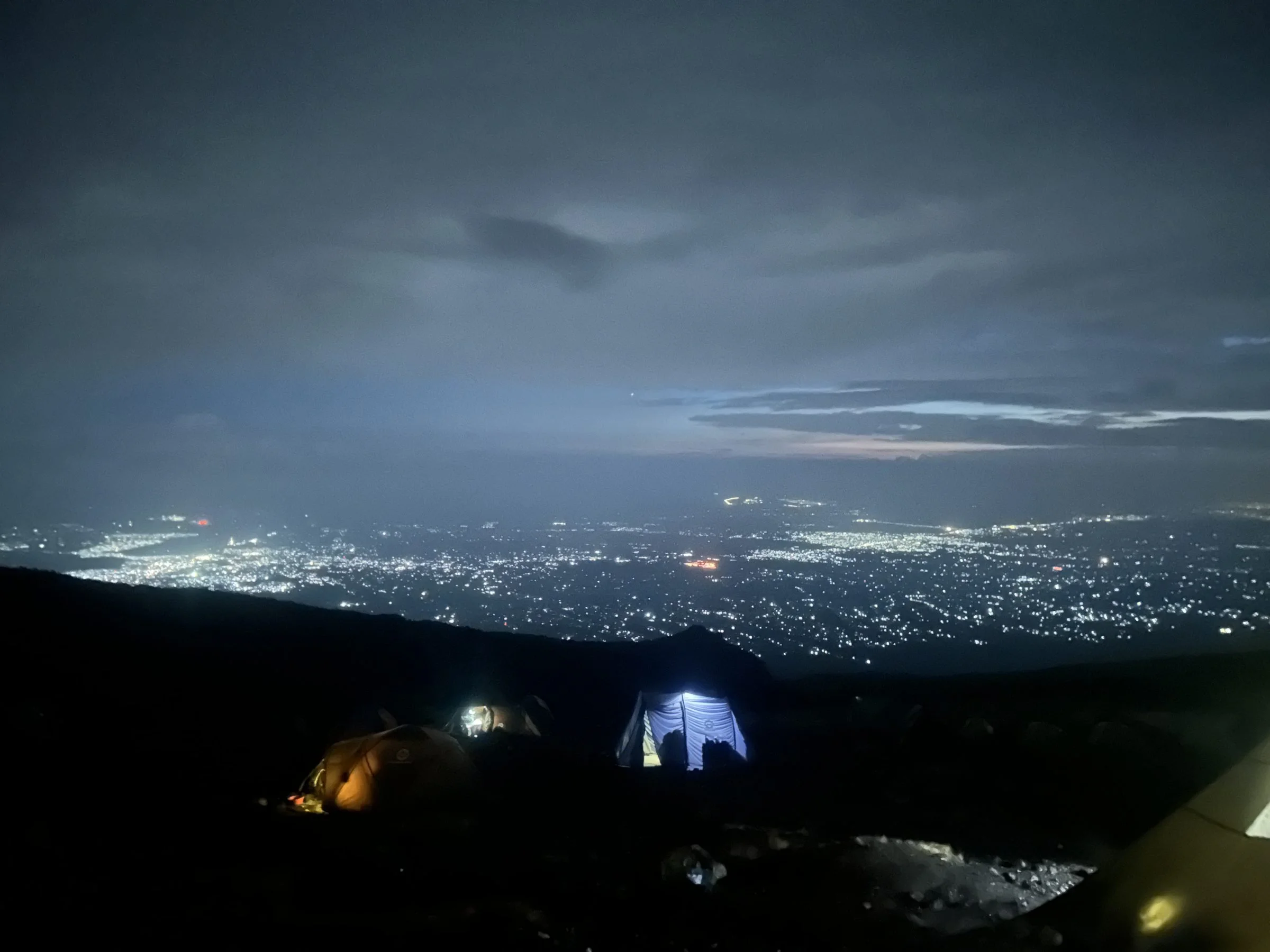
Camp at night, with the lights far below.
3. Be the last one home
I knew from the outset that on the return to camp from the summit push – around 12 hours all told – I would be the last one in. I wasn’t going to leave anyone battling down the mountain while I sat in my tent and recovered.
For me, that was simple and non-negotiable. It links straight back to service: I’m there to serve, so if they’re still out there, so am I.
4. Be a sponge
Leadership is a privilege. I get to meet incredible people, take them to amazing places and get to know them and their stories. I also get to watch how they operate, and how they face challenges.
Honestly, this was one of my favourite parts of the trip. Watching a group of friends, and a father and son, take on Africa’s highest peak – and do it with smiles on their faces – inspired me.
The Royal Marines have a saying: “cheerfulness in the face of adversity”. Without any military training, this amazing group did exactly that. So learn from your team.
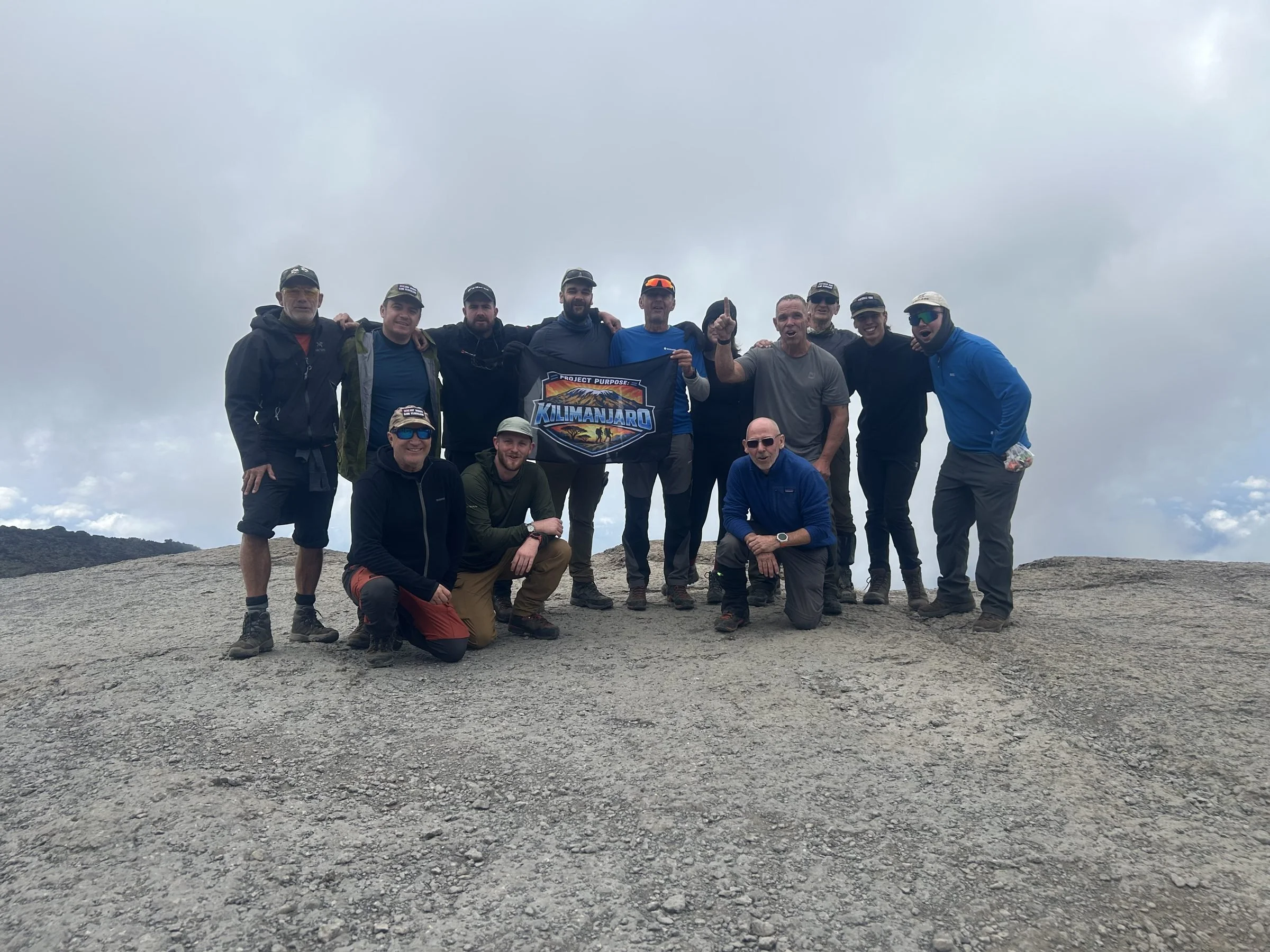
The October 2026 team.
5. Be a small fish
I’m not going to pretend I was the only leader on the trip. And I certainly wasn’t the strongest. You can only climb Kilimanjaro with the help of the amazing guides and crew – they’re the true heroes.
So make sure you’re always surrounded by bigger fish, and value them.
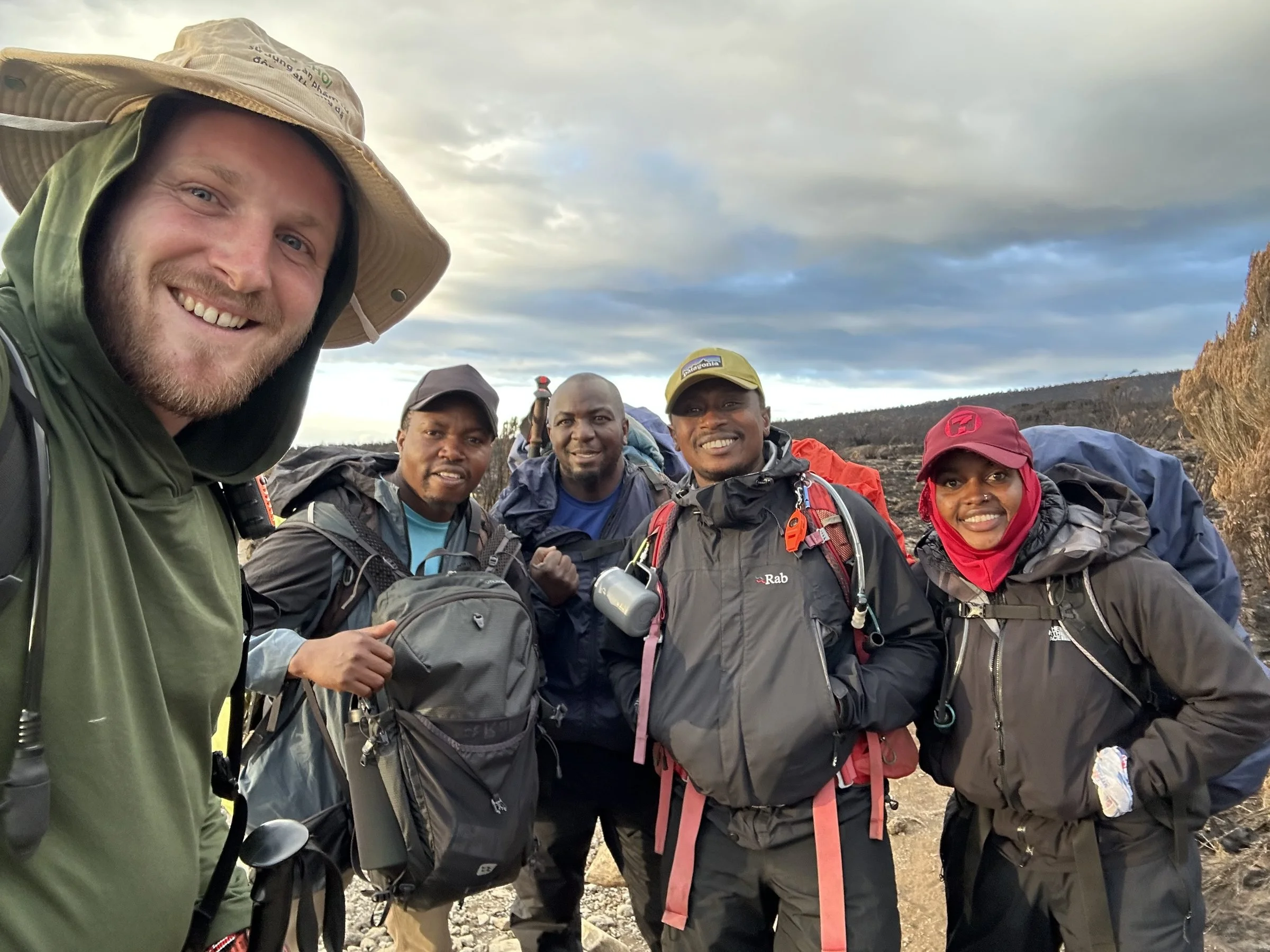
The true heroes: our guides and crew.
Climb with me in 2027
I’m leading Project Purpose: Kilimanjaro again in 2027. If you’d like to stand on the roof of Africa – and be looked after every step of the way – find out about Kilimanjaro 2027.
Want these lessons for your team or event? I speak on leadership, risk and decision-making – see my talks.